

Key Takeaways
- Adderall withdrawal symptoms can affect both physical and mental health, often including fatigue, depression, and cravings.
- Stopping Adderall without help can be risky, making professional treatment and medical oversight important.
- Ocean Hills Recovery offers expert treatment for stimulant addiction, including inpatient and family programming in Orange County.
Understanding Adderall Withdrawal and Its Challenges
Adderall is often prescribed for ADHD, but dependence can develop with time. When someone tries to stop, Adderall withdrawal may bring fatigue, depression, and cravings that feel hard to manage. With millions of prescriptions written each year, many families face the challenges of misuse and dependency. Stopping without support can make symptoms worse. At Ocean Hills Recovery, we see the impact of stimulant addiction and know recovery is possible with treatment, family involvement, and medical care.
What is Adderall
Adderall is a prescription medication that combines amphetamine and dextroamphetamine salts. It is commonly used to treat ADHD and sometimes narcolepsy. As a central nervous system stimulant, Adderall increases dopamine and norepinephrine activity in the brain, improving focus and attention.
While it can be effective as an ADHD medication, misuse or long-term use may lead to dependence. People who take higher doses than prescribed, use it without a prescription, or rely on it to function are more likely to develop problems.
Is Adderall Addictive
Yes, Adderall is addictive. Because it strongly affects dopamine pathways, it has a high risk for misuse and addiction. Even those who begin with a legitimate prescription can develop tolerance, leading them to take more over time.
Signs of Adderall addiction include:
- Feeling unable to function without the drug
- Taking more than prescribed
- Using the drug for energy or performance rather than treatment
- Cravings and withdrawal symptoms when trying to stop
Ocean Hills Recovery provides treatment for stimulant abuse, addressing both the physical effects and the emotional challenges that come with addiction.
Does Adderall Have Withdrawal Symptoms
Yes, Adderall does have withdrawal symptoms. When someone stops using this ADHD medication, the brain and body react quickly. Adderall is a powerful stimulant that increases dopamine and norepinephrine. Over time, the body adjusts to this artificial boost. Once use stops, these brain chemicals drop, and uncomfortable Adderall withdrawal symptoms appear.
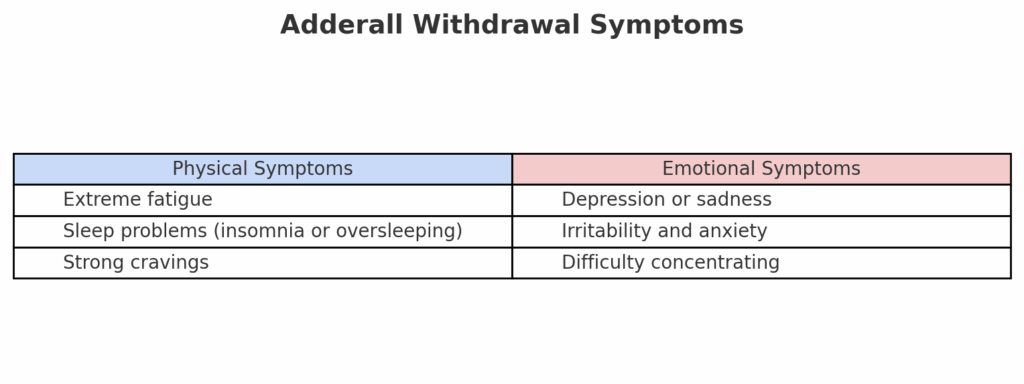
Common withdrawal symptoms include:
- Extreme fatigue that makes daily tasks difficult
- Depression or sadness caused by low dopamine levels
- Sleep problems, including insomnia or sleeping too much
- Irritability and anxiety as the nervous system adjusts
- Strong cravings for Adderall that can trigger relapse
- Difficulty concentrating or staying motivated without the drug
These symptoms often begin within hours of the last dose. For many, the first few days are the hardest, with cravings, mood swings, and exhaustion peaking. Depending on how long a person has been taking Adderall and at what dose, withdrawal can last for days or even weeks.
For people who used the drug heavily or misused it, the effects can feel even stronger. Without help, withdrawal can lead to relapse, making recovery harder. That’s why supervised care matters. At Ocean Hills Recovery, we provide structured treatment to manage Adderall withdrawal safely while addressing the emotional and physical challenges that come with it.
What are the Side Effects of Adderall Comedown
The side effects of Adderall comedown are similar to withdrawal but occur as the drug wears off between doses. People often experience:
- Low mood or sadness
- Irritability
- Anxiety
- Trouble sleeping
- Difficulty focusing
- Lack of motivation
While these symptoms may pass in a short period, repeated use and comedowns can lead to dependency and more severe withdrawal once use stops completely.
How Long Does it Take For Your Brain to Get Back to Normal After Adderall
The timeline for your brain to get back to normal after Adderall varies. Some people feel better within a few weeks, while others may struggle for months. Factors include:
- How long the drug was used
- Dosage amounts
- Presence of other substances
- Mental health conditions
On average, symptoms like fatigue and sleep disturbance may last for a few days, while mood symptoms like depression and low motivation may take weeks or longer to improve. With proper treatment, recovery can be smoother and more manageable.
What Happens to Your Body When You Quit Adderall
When someone quits Adderall, the body reacts in many ways. Some of the main changes that happen include:
- Drop in dopamine levels, leading to low mood
- Physical fatigue as the nervous system slows down
- Intense hunger or appetite changes
- Sleep disruption
- Decreased focus and motivation
These changes are temporary but can feel intense. That’s why supervised detox and treatment are recommended. At Ocean Hills Recovery, detox services provide medical oversight to make the process safer and less stressful.
Adderall Withdrawal Timeline
The timeline for Adderall withdrawal varies, but typically follows this pattern:
- First 24–48 hours: Fatigue, depression, and cravings begin.
- Days 3–5: Symptoms peak, including irritability, anxiety, and trouble sleeping.
- First 1–2 weeks: Mood swings, ongoing fatigue, and cravings continue.
- Weeks to months: Some people may still experience mild symptoms, especially depression or low motivation.
Support during this time is critical, especially for those with severe addiction or mental health concerns.
Treatment for Adderall Withdrawal at Ocean Hills Recovery
At Ocean Hills Recovery, treatment addresses both withdrawal symptoms and the underlying causes of stimulant use. Our programs include:
- Medical detox with 24/7 support
- Inpatient care for structured treatment
- Partial hospitalization and IOP for continued care
- Family programming to involve loved ones in recovery
- Therapies like CBT, DBT, EMDR, and relapse prevention
Our physician-led approach helps clients safely manage withdrawal while addressing the emotional, behavioral, and family aspects of addiction.
Get Adderall Withdrawal Support at Ocean Hills Recovery
Adderall withdrawal can be difficult, both physically and emotionally. Fatigue, depression, and cravings are common, and without help, relapse is likely. But with support, recovery is possible.
At Ocean Hills Recovery, we provide the guidance and treatment needed to manage stimulant addiction and build a healthier future. Call Ocean Hills Recovery today to begin the path to recovery.
FAQs
1. Does Adderall have withdrawal symptoms?
Yes, Adderall withdrawal can cause both physical and emotional symptoms. These may include extreme fatigue, depression, sleep problems, irritability, cravings, and trouble focusing. The severity and duration depend on how long and how much someone has been using the medication.
2. What are the side effects of Adderall comedown?
An Adderall comedown happens as the drug wears off between doses. Side effects often include sadness, irritability, anxiety, difficulty sleeping, lack of motivation, and problems concentrating.
3. How do you feel when Adderall starts to wear off?
When Adderall begins to wear off, many people feel mentally and physically drained. Mood changes, low energy, hunger, and difficulty focusing are common. This “crash” can be uncomfortable and may increase the desire to take more of the drug.
4. Does Adderall need to be weaned?
Yes, in most cases Adderall should be reduced gradually under medical guidance. Stopping suddenly can make withdrawal symptoms worse and increase the risk of relapse. A tapering plan helps the brain and body adjust more safely.
5. What happens when you suddenly stop ADHD medication?
Stopping ADHD medication like Adderall all at once can lead to withdrawal. Common effects include fatigue, low mood, irritability, sleep issues, and strong cravings. Medical supervision is recommended to reduce discomfort and support recovery.
About the author:


