

Key Takeaways:
- Athletes face higher addiction risk due to performance pressure, injuries, and mental health stress, making substance use more common at student, collegiate, and professional levels.
- Opioids, alcohol, stimulants, and performance-enhancing drugs are commonly misused by athletes, often beginning with injury treatment or the desire to improve performance.
- Ocean Hills Recovery in Orange County, California offers specialized addiction treatment for athletes, providing inpatient and outpatient programs that support physical health, mental wellness, and long-term recovery.
Athletes and Addiction Recovery in Orange County
The physical and mental demands placed on athletes can be intense, whether at the student or professional level. Constant pressure to perform, manage injuries, and maintain peak conditioning can take a serious toll over time. For some athletes, this stress increases the risk of turning to drugs or alcohol as a way to cope or manage pain. Substance use can quickly interfere with performance, health, and overall well-being. Ocean Hills Recovery in Orange County, California provides addiction treatment programs designed to help athletes regain balance and build long-term recovery.
3 Factors That Help Explain The Correlation Between Athletes And Addiction
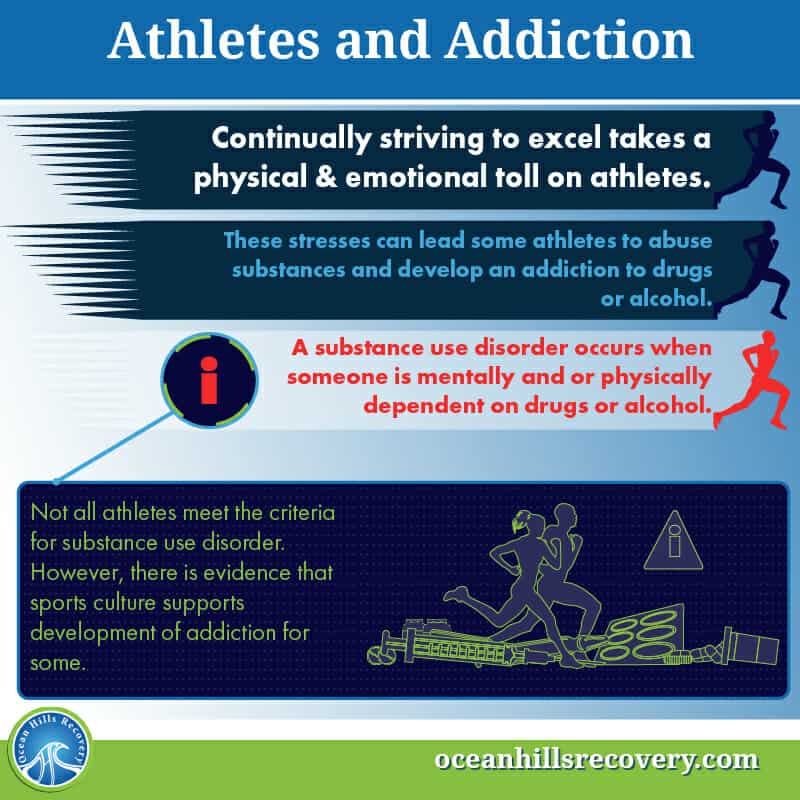
A substance use disorder occurs when someone is mentally and or physically dependent on drugs or alcohol. Not every substance-using athlete meets the criteria for this disorder. However, there is no doubt that unhealthy relationships between athletes and drugs are all too familiar. Research has even found that some individuals find the sports culture to support the development of addictions.
Some of the reasons that explain why many athletes spiral into addiction include the following:
Struggles Coinciding with Mental Health Issues
The pressures to perform, stay in ideal shape, and avoid injury are a few of the many factors that play a role in an athlete’s declining mental health. More specifically, one study on elite Canadian athletes found that 41.4% met the criteria for one or more mental health disorders.2 Another statistic reveals that one-third of Division 1 NCAA female athletes are at risk of the eating disorder anorexia, a dangerous mental illness.3
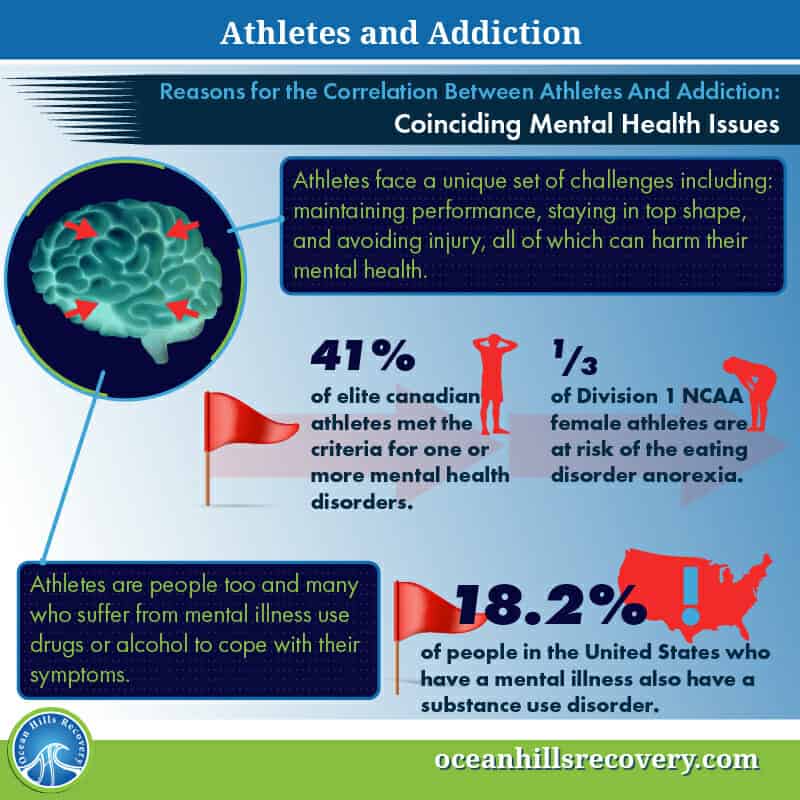
Many individuals who have mental illness use drugs and alcohol to cope with their symptoms. 18.2% of those in the United States with a mental illness are also struggling with some kind of substance use disorder.4 Since many athletes have struggled with mental health, they are also likely to use substances for coping.
Influx Of Opioid Prescriptions For Treating Injuries
Any sport increases one’s susceptibility to getting an injury. Whether it’s a torn ACL, broken bone, sprained ankle, or another painful injury, many athletes are prescribed opioids to cope with the pain during their recovery.
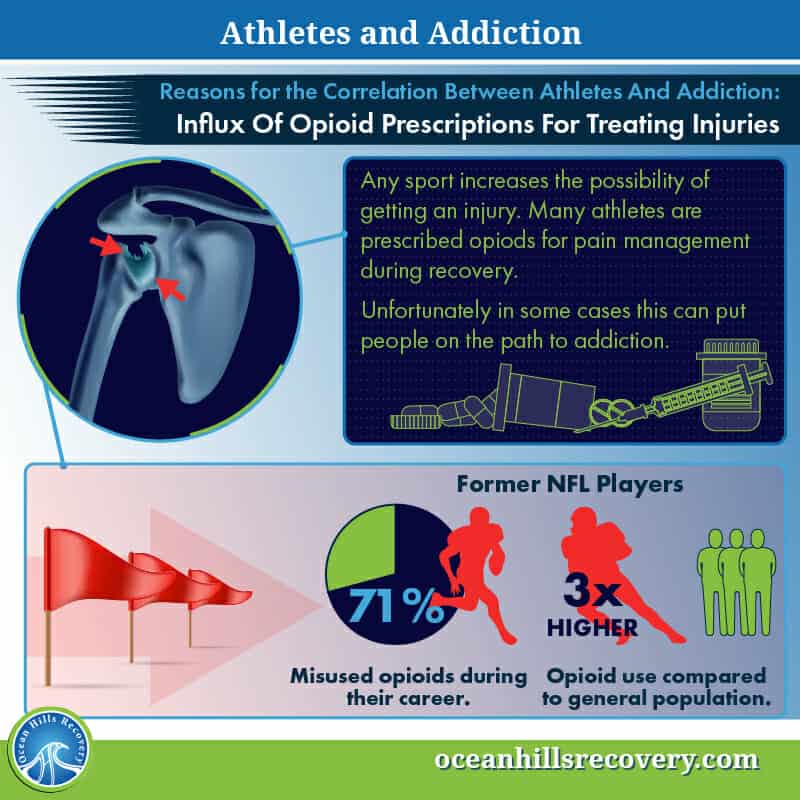
This leads many on a path to addiction, for one study on former NFL Players found that 71% misused opioids during their career.5 Furthermore, their current amount of opioid use was 3x higher than the general population.5
The Desire To Improve One’s Sports Performance
One of the traps that many athletes fall into with drug use is using them to improve their performance. Whether it’s taking anabolic steroids to increase their muscle mass or a stimulant drug to give them more adrenaline on the day of their game or event, the pressure of performing at the highest caliber possible to beat out the competition can lead to the abuse of these harmful drugs.
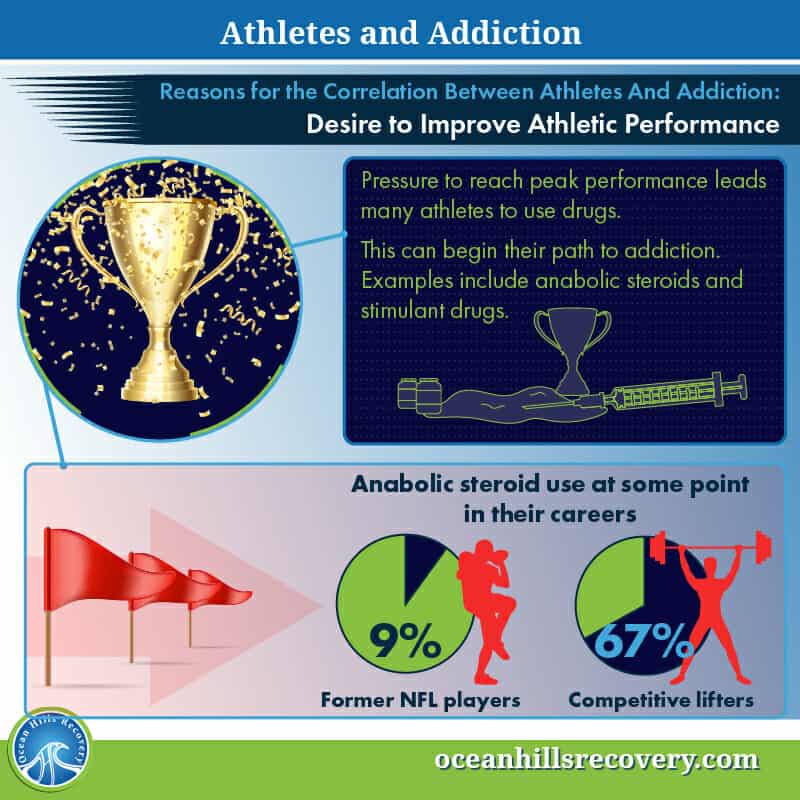
When it comes to using steroids for improving strength, research indicates that 9% of professional football players have used anabolic steroids at some point in their career and a shocking 67% of competitive lifters.6
What It Looks Like: Academic or Professional Athletes and Addiction
Whether a seasoned pro or just an up-and-coming student-athlete, drug use can occur at all stages of an athlete’s journey. Here is an overview of what drug use might look like for three levels of athletes:
Student-Athletes and Drug Use
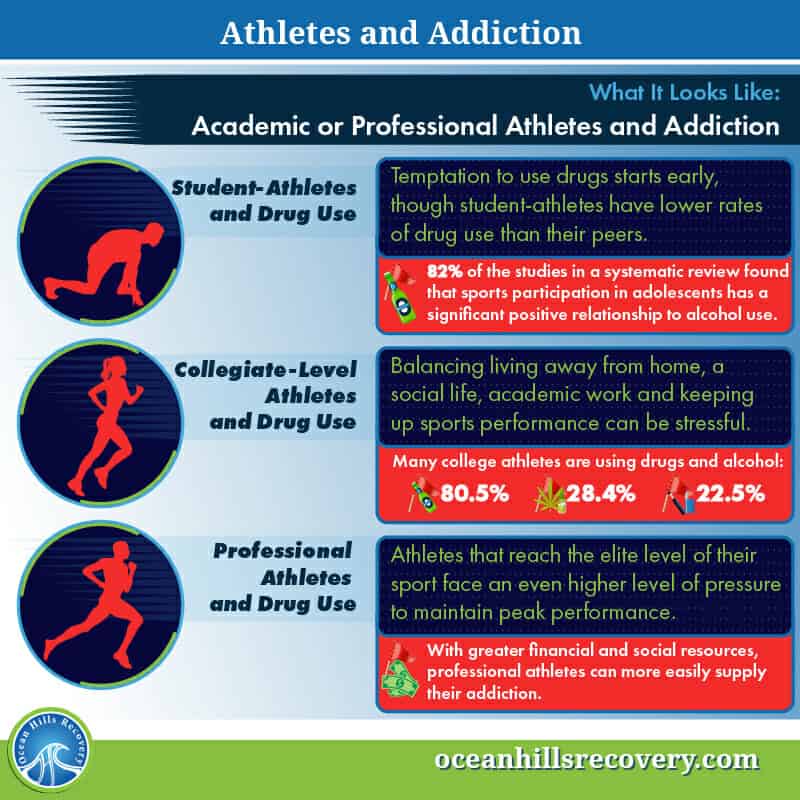
The temptation for athletes to start using starts quite young. While student-athletes might have lower rates of using some drugs than their peers, 82% of the studies in a systematic review found that sports participation in adolescents has a significant positive relationship to alcohol use.7
Collegiate-Level Athletes and Drug Use
Collegiate-level athletes have to balance adjusting to living away from home, a social life, and academic pressures to perform well in sports. This is a recipe for heightened stress and the risk of drug abuse. Research studies found that many college athletes use alcohol (80.5%), marijuana (28.4%), and smokeless tobacco (22.5%).8
Professional Athletes and Drug Use
When athletes have reached the elite level of playing sports, they often have added stress to perform well and more financial and social resources to supply their addiction. This is shown in the countless famous athletes who have openly discussed their struggles with addiction publicly.
Get Addiction Treatment at Ocean Hills Recovery in Orange County, California
Athletes face different pressures that can increase the risk of addiction, from injuries and pain management to performance stress and mental health challenges. When substance use starts to interfere with health, focus, or career goals, professional support can make a real difference. Ocean Hills Recovery in Orange County, California provides inpatient and outpatient treatment options for adults 18 and older, designed to address both addiction and underlying issues. Our programs offer structure, support, and tools to help build long-term stability. Call Ocean Hills Recovery Today!
About the author:


